
In August, Hyundai recorded its highest ever domestic sales for the month with 54,396 units sold, marking a 23.6 per cent Y-o-Y increase. The Creta Electric currently anchors Hyundai's mass-market electric portfolio, while the Ioniq 5 caters to the premium end

Hyundai Motor India expects SUV sales to account for 65 per cent of its overall volumes in 2024, while it gears up to enter the EV segment early next year, aiming to garner 20 per cent of its total sales by 2030, its COO Tarun Garg said on Tuesday. The automaker, which got around 60 per cent of its overall volumes from sports utility vehicle (SUV) sales last year, plans to invest Rs 7,000 crore on its second plant at Talegaon, according to Maharashtra Deputy Chief Minister Devendra Fadnavis. The company officials however declined to comment on the matter.

India's electric vehicle market achieved a significant milestone in June 2026, accounting for over 12% of total vehicle retail sales for the first time. This growth, driven by strong demand across electric two-wheelers, passenger vehicles, and commercial vehicles, saw overall EV retail sales surge by 63% year-on-year to a record 306,220 units, indicating a mainstream shift in mobility.

koda Auto Volkswagen India is actively exploring various approaches to penetrate India's burgeoning electric vehicle (EV) market, including importing global models, local assembly, and developing highly localised products, as EV penetration is expected to reach 17-18% by the end of the decade.

TVS Motor Company reported a significant 56.8 per cent year-on-year increase in net profit to 1,036 crore in Q1FY27, driven by record sales volumes, an improved product mix, and robust demand in both domestic and international markets, with management anticipating continued double-digit industry growth.

The new range brings Ola's 46-series LFP cells to its most affordable scooter lineup aimed at India's mass-market electric vehicle (EV) buyers.

Electric vehicle retail sales in India reached a new monthly record of 3,27,901 units in July, marking a 66 per cent increase over the previous year, with nearly one in eight vehicles retailed now being electric.
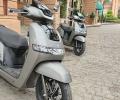
India's electric two-wheeler market has seen record penetration, exceeding 11.2 per cent, driven by crude oil price fluctuations. This surge has led to an unexpected crisis for Indian OEMs, with unfulfilled customer demand reaching 20-30 per cent and average waiting periods exceeding four weeks, a situation expected to intensify during the upcoming festival season.

While charger deployment is yet to begin, the scheme has supported the sale of 2.65 million EVs as of July 22.

Electric vehicle (EV) penetration in the luxury car segment has seen a drop by nearly 3 percentage points in the GST 2.0 era with the internal combustion engine versions offering better total cost of ownership, according to industry players. While the trend is also visible in the mass market segment, it is the entry luxury segment that is witnessing a more marked shift towards internal combustion engine (ICE) vehicles as price difference between EV and ICE widened under the new GST rates.

Tata Motors expands its market leadership in India's electric passenger vehicle (ePV) segment, capturing 39 per cent of the market in Q1FY27, while simultaneously strengthening its position as the nation's second-largest carmaker amidst fierce competition and rapid market growth.
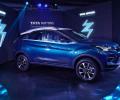
Tata Motors has emerged as the biggest market-share gainer among India's leading passenger vehicle (PV) makers in the first eight months of 2026, securing the No. 2 position in the PV market.

The Ministry of Heavy Industries (MHI) anticipates disbursing approximately 4,700 crore in incentives under the automotive PLI scheme in FY27, more than double the previous two years, while also exploring financing mechanisms for electric buses and trucks and promoting domestic manufacturing of critical EV components.
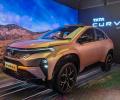
India's electric passenger vehicle market saw an 87.4 per cent year-on-year increase in FY26, reaching 233,246 units, primarily driven by the mid-size SUV segment (20-30 lakh price bracket), while the entry-level segment (sub-10 lakh) experienced a decline.

India's electric vehicle market is experiencing an unprecedented boom with a 37 per cent increase in new entrants, driven by supportive policies and infrastructure.
Skoda Auto is strategically navigating the competitive Indian automotive market by prioritising profitable growth, exploring new powertrain options like CNG and a limited diesel return, and gearing up for a locally produced electric SUV, all while expanding its retail footprint.

Tata Motors Passenger Vehicles is gearing up for the next phase of electric vehicle adoption in India, targeting over 30% EV penetration by FY31. The company plans to launch four new products and over ten refreshes by FY31, expanding its portfolio to ten EV nameplates. This strategy aims to move beyond early adopters to engage the early and late majority consumers, focusing on enhanced range, faster charging, and improved battery technology.
Indian two-wheeler buyers are increasingly opting for feature-rich, higher-end variants and premium motorcycles, driven by technology, safety, and easier access to finance, according to TVS Motor Company. The company is also exploring alternative electric motor technologies to secure its supply chain amidst growing EV penetration.

The promoter entities of JSW Group are in talks with several electric-car manufacturers in China to launch an electric car for the Indian market at Rs 15-20 lakh, a source close to the development said.
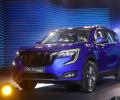
Mahindra & Mahindra's Q1FY27 results missed consensus estimates due to declining gross margins, but strong demand for its SUV portfolio and strategic price hikes are expected to drive near-term gains, particularly in the auto segment, despite headwinds in farm equipment.
India-EU FTA opens a bigger European market for Indian carmakers while giving European brands greater access to India.

The highly anticipated new generation Toyota Hilux is set to launch in India in July this year with significant upgrades, premium features, and a powerful mild-hybrid diesel engine, aiming to capture the Indian pick-up truck market.
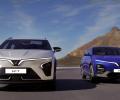
New players like Maruti Suzuki, VinFast, and Tesla are significantly expanding India's electric passenger vehicle (e-PV) market, capturing an 8.1 per cent share and contributing 18 per cent of incremental registrations in the first half of 2026, according to Fada Research data.

With Konarc, the company has moved deeper into the mass-market e2W segment.

Fuel prices have risen by about Rs 7.5 per litre since May 15, as global crude oil prices surged due to the ongoing conflict in West Asia and supply concerns around the Strait of Hormuz.

Maruti Suzuki India is strategically investing in the premium hatchback segment, launching a refreshed Baleno with advanced driver assistance systems (ADAS) to capture a significant share of the evolving Indian passenger vehicle market, even as SUVs continue their dominance.

BMW India has outpaced rival Mercedes-Benz India in luxury car registrations for the first quarter of calendar year 2026, driven by new product launches and a growing electric vehicle segment, even as the overall luxury car market remains largely flat.

Total automobile retail sales in India surged by 25.89 per cent year-on-year to 25,91,138 units in July, driven by GST rationalisation, ease of retail finance, and favourable festival timing, according to the Federation of Automobile Dealers Associations (FADA). This marks the first time all vehicle categories recorded their best-ever July sales.
Electric passenger vehicle retail sales in India surged by 81.2 per cent to 26,682 units in May, with Tata Motors leading the segment, while electric two-wheeler sales also saw a substantial 62.76 per cent increase, according to the Federation of Automobile Dealers Associations (FADA).

Bajaj Auto plans to increase its annual production capacity by nearly 25 per cent, from around 7 million to over 9 million vehicles, in the coming quarters. This expansion is driven by strong export demand and rapid growth in electric vehicles, which have stretched current capacity across key product segments.

The updated Maruti Suzuki Baleno redefines the premium hatchback segment in India with its aggressive new look, advanced Level 2 ADAS features, and a more fuel-efficient Z series petrol engine, catering to the evolving demands of tech-savvy car buyers.

India's automobile retail sales reached an unprecedented 24.23 lakh units in August, marking a 17.51 per cent year-on-year growth, with alternative fuels (CNG, hybrid, and electric) collectively surpassing petrol in the passenger vehicle segment for the first time.

Six months after its India debut, the Vietnamese automaker has overtaken established players such as Hyundai Motor, BMW, Kia, and Chinese EV major BYD.
TVS Motor Company is strategically positioned for sustained outperformance in the domestic two-wheeler industry, propelled by increasing market share in scooters, premium motorcycles, electric vehicles (EVs), and robust export growth, according to analysts.

JSW Motors, part of the JSW group, is set to enter India's passenger vehicle market with plans to launch 15 new-energy vehicles (NEVs) over the next four years, with deliveries commencing from December 2026.
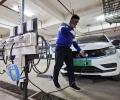
India's electric vehicle (EV) market experienced a significant surge in financial year 2025-26 (FY26), with e4W registrations nearly doubling and e2Ws growing by over 20%, propelled by expanding charging infrastructure, diverse model launches, and accessible financing.

Tata Motors has launched the Curvv Series X, an updated version of its coupe-SUV, focusing on enhancing value-for-money by adding more features to lower and mid-spec variants and streamlining the lineup, with prices ranging from Rs 9.99 lakh to Rs 18.99 lakh (ex-showroom).

The Central government has approved an additional Rs 1,000 crore for electric two-wheelers (e2w) under the PM Electric Drive Revolution in Innovative Vehicle Enhancement (PM E-DRIVE) scheme, extending incentives for the segment until March 2028.

Sun Pharmaceutical Industries' acquisition of US-based Organon & Co. for $11.75 billion, the largest overseas acquisition by an Indian pharma company, has been met with mixed reactions from brokerages, who see strategic entry into women's health and biosimilars but also flag potential integration challenges and debt concerns.
VinFast has gone from an unknown brand to India's fifth-largest EV carmaker in just seven months, but its toughest battle is only beginning.
